Metro Decommits
Austin's transit authority abandons commitment to clean air

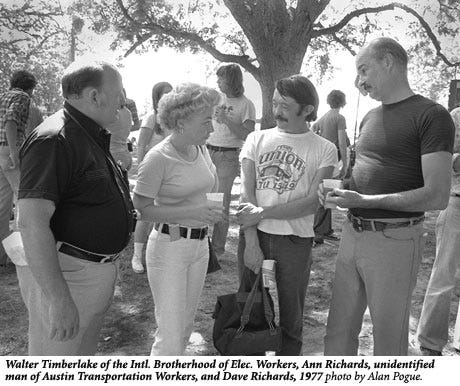
Back in Ann Richards days, Capital Metro joined a national trend in transit and promised to help clean the air by converting the bus fleet to Texas produced natural gas.
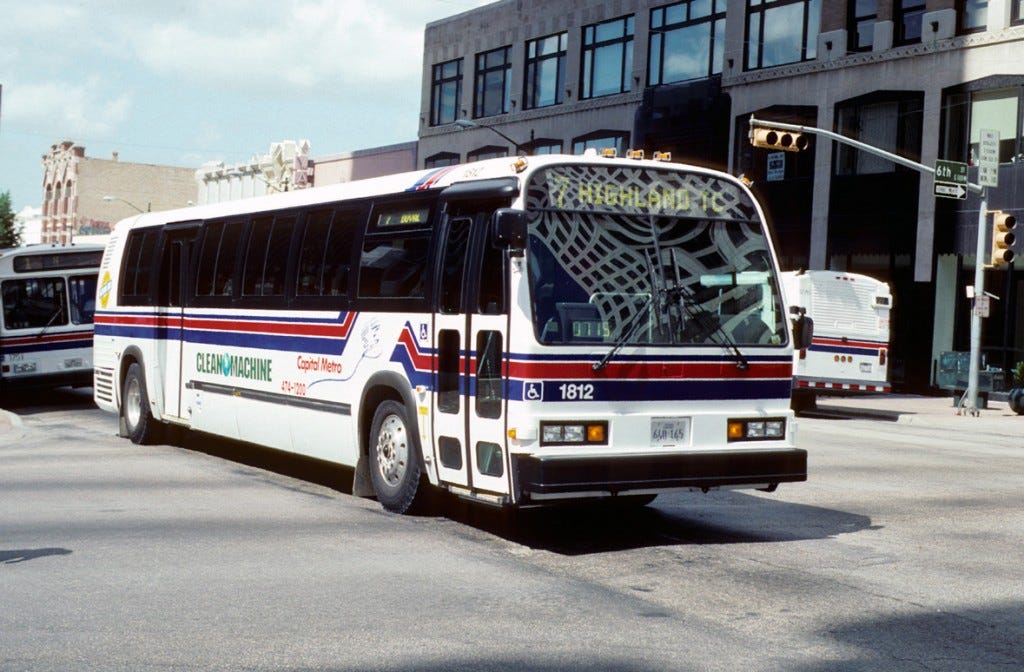
They bragged about their brand new fleet of “Clean Machines.”
It was a righteous move in the nineties. Electric buses still weren't viable and sail buses never really caught on. CNG (Compressed Natural Gas ) was proven to be cleaner burning than other fossil fuels, was produced in Texas, and was (and still is) cheap.

[Sail Bus, 2024 - painting by John Brown]
The CNG honeymoon was short lived. The buses were clunky and the drivers hated them. Worse, the maintenance department couldn't keep up with the breakdowns and the mechanics hated them. At Metro, when the mechanics turn on something it's over. So then maintenance director, John Lancaster led a complete abandonment of CNG and Metro went back to 100% diesel buses.
Abandoning CNG was a slap in the face to the environment and has to be be regarded as one of the most epic of Metro's many financial fails. Millions in costly fueling apparatus was scrapped and the buses were retired early. A study by the Texas Transportation Institute showed a never realized fuel cost savings of $22 million dollars. This savings would have likely helped avoid the cash reserves scandal in 2009, where Metro leaders spent all the cash reserves during an unanticipated fuel crunch and withheld millions in payments owed to the city. This led to a still controversial change in cash reserves limits that are markedly higher than allowed of most other taxing entities.
On Earth Day 2021, Metro once again pronounced it's undying love for the planet and committed to using 100% electric vehicles by the year 2035. The move seemingly came from nowhere when Lancaster's daughter, now CEO Dottie Watkins announced the world's largest purchase of $255 million dollars worth of electric buses. Old guard SOS and NexGen environmentalists both eagerly cheered the move. For a brief shining moment, Austin and Capital Metro were leading the whole world in environmental stewardship.
Then, just as the hole in the ozone layer was about to close, it turned out that yet again, Metro was incapable of maintaining the electric buses and unwilling to install the requisite charging systems. Further aggravating matters, Proterra one of the manufacturers of part of the purchase, went bankrupt.
Metro’s answer to the debacle is to mothball $46 million dollars worth of rolling stock.
In addition to $46 million dollars in cold, hard cash, all the fuel savings and environmental benefits will be lost. Storage is costing millions. The cost of depreciation alone could pay for everyone's bus and train fare every year.
As it’s final divorce decree, Metro announced in January 2026, the mothballed fleet would be replaced with $45 million dollars worth of diesel buses. These buses will burn fossil fuels well beyond the 2035 promise date for zero emissions. The life expectancy of a bus is 15 years, so Metro is committing to fossil fuels until at least 2042.
Imagine if you blew 10% of the capital budget at your job on cellphones and forgot to buy the chargers. And your solution was to throw $46 million dollars worth of cellphones in a drawer! You would for sure get a writeup. In this year’s Metro budget it will be raises for everybody.